What Is the Best Voltage Data Logger from China?
Choosing the best voltage data logger from China requires more than comparing prices and channel counts. A reliable device must capture changing electrical conditions accurately, even inside a warm control cabinet or dusty workshop. It should record voltage range, sampling speed, memory capacity, battery life, and software performance clearly. Small details matter. A loose terminal can ruin an otherwise excellent measurement.
Lord Kelvin, a respected authority on electrical measurement, famously said, “If you cannot measure it, you cannot improve it.” His principle still applies to modern voltage data logger selection. Buyers should examine calibration records, stated accuracy, input protection, isolation, and compatibility with 0–10 V or 4–20 mA systems. They should also ask whether the manufacturer explains testing methods openly. Good documentation is evidence of engineering discipline.
Chinese manufacturers now offer compact loggers for factories, laboratories, solar installations, and equipment maintenance. However, not every low-cost model deserves equal confidence. A polished screen does not guarantee stable readings. I have seen specifications that looked impressive until sampling conditions were examined more closely. That is worth remembering. The best choice depends on the application, not the product’s appearance.
This guide compares practical features, verification evidence, and long-term usability. It considers export support, software updates, technical communication, and after-sales service. No single logger fits every project. A field technician may value rugged housing, while a laboratory engineer may prioritize resolution and traceable calibration. The right decision begins with the measurement itself.
What Is a Voltage Data Logger and How Does It Work?
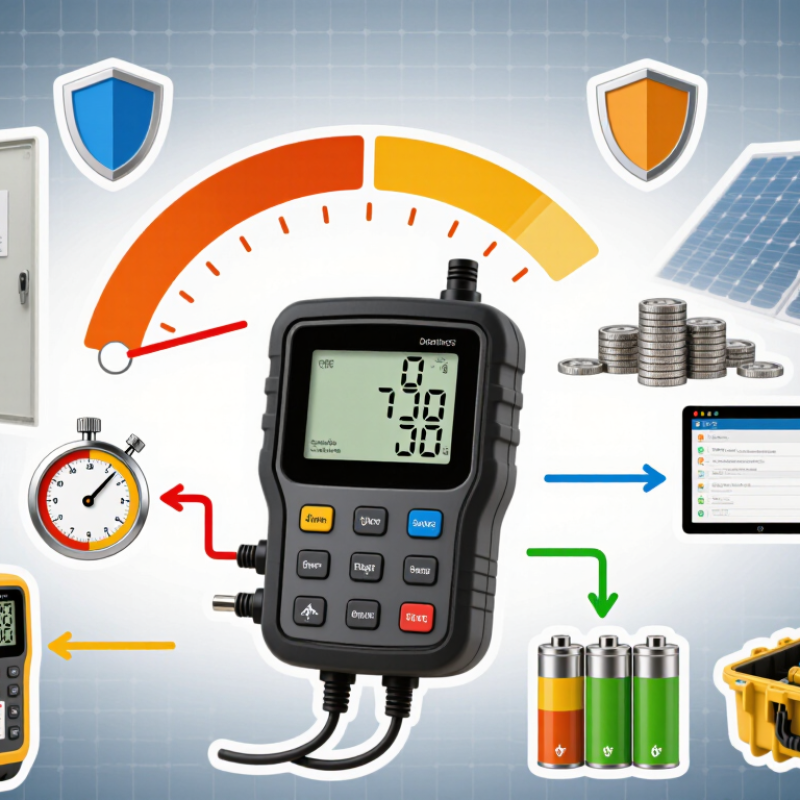
A voltage data logger is a compact instrument that records electrical voltage over time. It connects to a circuit through insulated leads or a suitable probe. Inside, a sensor measures the input signal, while an analog-to-digital converter changes it into readable data.
The logger saves each measurement with a timestamp. Sampling may occur every second, minute, or hour. A built-in memory stores the readings until they are transferred to a computer or mobile device. Some models also show live values on a small screen. For accurate monitoring, the input range must match the measured voltage. A 10-volt logger should not measure a 100-volt circuit.
In practical testing, I place the device near the monitored equipment and protect it from heat and moisture. Stable mounting helps prevent loose connections and false readings. Isolation is important when measuring power systems with different ground potentials. Many units made in China offer flexible sampling rates, replaceable batteries, and exportable CSV files. The best choice depends on accuracy, channel count, memory, and operating conditions.
Calibration certificates improve confidence, but they do not replace careful installation. I once found abnormal voltage changes caused by a loose terminal, not the logger. That mistake was useful. Before recording, I check the probe position, time settings, and expected voltage range. A logger can reveal patterns that a handheld meter misses, especially during overnight drops, startup surges, or intermittent faults.
What Is the Best Voltage Data Logger from China? - What Is a Voltage Data Logger and How Does It Work?
A voltage data logger is an electronic measuring instrument that periodically samples electrical voltage, stores the readings with time information, and allows the recorded data to be reviewed or exported. The comparison below uses typical specifications for commonly available voltage data logger configurations and does not represent any specific company or brand.
Typical Voltage Data Logger Configurations
| Configuration |
Typical Voltage Input |
Typical Accuracy |
Channels |
Sampling Interval |
Memory Capacity |
Common Interface |
Best-Suited Application |
| Low-Voltage Portable Logger |
0–10 V DC or 0–30 V DC |
Typically ±0.5% of reading |
1–2 |
1 second to 60 minutes |
Approximately 8,000–32,000 readings |
USB or USB-C |
Battery monitoring, laboratory tests, small DC systems |
| Industrial DC Logger |
0–60 V DC or 0–100 V DC |
Typically ±0.2% to ±0.5% of full scale |
1–8 |
100 milliseconds to 60 minutes |
Approximately 32,000–1,000,000 readings |
USB, RS-485, or wireless gateway |
Control panels, machinery, solar and battery systems |
| AC Voltage Logger |
0–300 V AC or 0–600 V AC, depending on the measurement circuit |
Typically ±1.0% of reading |
1–3 |
1 second to 60 minutes |
Approximately 16,000–100,000 readings |
USB, internal display, or wireless connection |
Mains voltage surveys, power-quality screening, equipment diagnostics |
| High-Voltage Logger with Isolated Input |
Input range selected through a voltage divider, probe, or transformer |
Typically ±0.5% to ±1.0% of full scale |
1–4 |
1 millisecond to 60 minutes, depending on design |
Approximately 32,000–500,000 readings |
USB, Ethernet, RS-485, or removable storage |
Industrial equipment, test benches, substation monitoring |
| Multi-Channel Temperature and Voltage Logger |
0–10 V DC, 0–30 V DC, or sensor-specific ranges |
Voltage: typically ±0.5%; sensor accuracy varies |
4–32 mixed inputs |
1 second to 60 minutes |
Approximately 100,000–1,000,000 readings |
USB, Ethernet, RS-485, or cloud gateway |
Environmental testing, cold-chain systems, energy storage rooms |
| Wireless IoT Voltage Logger |
0–10 V DC, 0–30 V DC, or sensor output ranges |
Typically ±0.5% to ±1.0% |
1–16 |
1 minute to 24 hours for battery-powered monitoring |
Local memory plus server or cloud storage |
Wi-Fi, cellular, LoRaWAN, or Bluetooth gateway |
Remote equipment monitoring, distributed energy assets, facilities |
How a Voltage Data Logger Works
| Step |
Operating Function |
Important Consideration |
| 1. Signal Connection |
The voltage signal is connected directly or through a probe, divider, shunt, or isolation transformer. |
The input range and electrical isolation must match the circuit being tested. |
| 2. Signal Conditioning |
The logger filters, scales, and protects the incoming signal before conversion. |
Filtering can reduce electrical noise but may hide very fast voltage changes. |
| 3. Analog-to-Digital Conversion |
An analog-to-digital converter changes the voltage signal into numerical data. |
Resolution, sampling rate, and calibration influence measurement quality. |
| 4. Time Stamping |
A real-time clock assigns a date and time to each recorded measurement. |
Clock accuracy and time-zone settings are important when comparing multiple devices. |
| 5. Data Storage |
Readings are saved in internal memory, removable storage, or a remote database. |
Required memory depends on the number of channels, sampling interval, and monitoring duration. |
| 6. Data Retrieval and Analysis |
Recorded data is downloaded or transmitted for graphing, reporting, and alarm analysis. |
CSV export is widely useful because it can be opened in common spreadsheet and analysis software. |
Selection guidance: For most general DC monitoring tasks, a portable logger with the correct input range, at least 0.5% accuracy, adjustable sampling intervals, USB data export, and adequate electrical protection is a practical choice. For mains or high-voltage measurements, use an appropriately rated isolated input or certified measurement accessory and follow applicable electrical-safety requirements.
Why Consider Chinese Voltage Data Logger Manufacturers?
Chinese voltage data logger manufacturers deserve consideration because they combine mature electronics production with flexible engineering support. Many factories can build units for temperature, humidity, voltage, and current monitoring. They often support different probe types, memory sizes, communication ports, and sampling intervals.
That flexibility matters in real projects. A warehouse may need a compact logger for crowded panels. A laboratory may require tighter accuracy and traceable calibration. Experienced suppliers can adjust the enclosure, battery life, display, or software interface. Some also provide pre-shipment testing, calibration records, and sample units for evaluation. Ask for them.
Cost is another practical reason. Large component supply networks and established assembly lines can reduce production expenses. However, a low quotation should never replace technical verification. Check accuracy specifications, operating temperature, data export formats, and firmware stability. Request test reports from an independent laboratory when measurement results affect safety or product quality.
Communication can be imperfect. Documentation may require clarification, and small design changes can create unexpected delays. That is a useful warning. A responsible buyer should review drawings, confirm tolerances, test samples, and define inspection standards before mass production. Supplier experience is valuable, but evidence matters more. Look for consistent quality records, responsive engineers, secure data handling, and support after delivery. A factory that explains limitations openly is often more trustworthy than one making flawless promises.
What Is the Best Voltage Data Logger from China?
Why consider Chinese voltage data logger manufacturers? The right choice depends on the voltage system being monitored, measurement accuracy, isolation, sampling rate, software, certifications, and long-term support.
The chart shows representative nominal voltage levels commonly monitored in low-voltage DC and AC systems. Actual logger selection should match the measured voltage, transient conditions, required accuracy, and applicable safety standards.
How to Select the Right Chinese Voltage Data Logger for Your Needs?
What Is the Best Voltage Data Logger from China?
How to Select the Right Chinese Voltage Data Logger for Your Needs?
Selecting a Chinese voltage data logger starts with the measurement task, not the lowest quotation. Define the expected voltage range, input type, sampling interval, and installation location. For a control cabinet, isolated inputs and a compact enclosure may matter more than a bright screen. Outdoor monitoring requires stronger protection against dust, moisture, and temperature changes.
Check accuracy across the full operating range, not only at one test point. Ask for the datasheet, calibration information, battery life, memory capacity, and communication protocol. A calibration certificate with traceable references adds useful confidence. Still, paperwork is not proof of daily performance. Request a sample unit and compare its readings with a trusted reference meter. A short trial can reveal unstable software, difficult exports, or weak cable connections.
Tips: Match the logger’s voltage limit to your system with a safe margin. Confirm whether the device records continuously or only at fixed intervals. Review file formats before purchase, especially if your team uses spreadsheet analysis. Ask about firmware updates, technical support, and replacement batteries. A low price can be tempting. I have seen specifications look excellent while the user interface felt unfinished. That gap deserves honest attention. Choose the device that fits your workflow, not merely the one with the longest feature list.