Blog

How to Choose a Digital Water Meter for Global Sourcing?

Choosing a digital water meter is no longer a simple hardware decision. It affects billing accuracy, leakage detection, maintenance costs, and customer trust. The scale is significant. WHO and UNICEF’s Joint Monitoring Programme reported that 2.2 billion people lacked safely managed drinking water services in 2022. Reliable measurement therefore supports both utility performance and responsible resource management.

A global sourcing strategy must examine more than the purchase price. Start with the intended application, pipe diameter, flow range, water quality, and installation environment. Ultrasonic meters suit many modern networks because they have no moving parts. Mechanical meters may still offer practical value in simpler systems. The correct choice depends on evidence. It should not depend on marketing language.

Check accuracy under low and high flows. Review battery life, pressure loss, ingress protection, and remote reading options. Confirm whether LoRaWAN, NB-IoT, cellular, or wired communication matches the local network. Also verify calibration records and applicable regional requirements, including OIML or MID-related expectations where relevant. Cybersecurity deserves attention. A connected meter can expose operational data if suppliers neglect access controls.

The UN World Water Development Report 2024 highlights growing pressure on freshwater systems and infrastructure. That pressure makes dependable consumption data increasingly valuable. However, reports cannot replace field trials. A meter that performs well in a brochure may struggle with sediment, condensation, or unstable connectivity. This is where sourcing experience matters. Request samples, test representative water conditions, compare total lifecycle cost, and inspect supplier service capacity. The cheapest quotation may become expensive after installation. Choose measurable reliability, not impressive specifications alone.
How to Choose a Digital Water Meter for Global Sourcing?

Define Your Digital Water Meter Sourcing Requirements

Before comparing suppliers, define the measurement job. A residential meter may need a 15 mm connection, low-flow sensitivity, and monthly remote readings. An industrial site may require larger diameters, higher pressure ratings, and continuous data transmission. Record pipe size, expected minimum and maximum flow, water temperature, installation orientation, and available power. Do not guess the flow range. Field estimates are often incomplete.

The WHO and UNICEF Joint Monitoring Programme reported that 2.2 billion people lacked safely managed drinking water services in 2022. This highlights the need for reliable monitoring, especially where maintenance access is limited. Specify the required accuracy class, battery life, ingress protection, communication protocol, and local certification before requesting quotations. Include data ownership and cybersecurity requirements. These details are easy to overlook.

Ask suppliers for test reports, calibration procedures, failure-rate data, and samples from comparable climates. The World Bank has noted that non-revenue water can exceed 40% in some water systems, making dependable measurement financially important. However, a smart meter alone will not solve leakage. Poor installation, weak networks, and unverified data can reduce its value. Require a pilot installation with actual pressure fluctuations and nighttime flows. A spreadsheet comparison helps, but it cannot replace site evidence. That is where sourcing decisions often become less certain.
Compare Meter Technologies, Accuracy, and Smart Features

How to Choose a Digital Water Meter for Global Sourcing?

Choosing a digital water meter starts with technology, not appearance. Mechanical meters are familiar and often economical, but moving parts may wear in gritty water. Ultrasonic meters measure flow without internal movement, supporting stable accuracy and lower maintenance. Electromagnetic meters can perform well with conductive water, although installation conditions matter. They may not suit every building or pipeline.

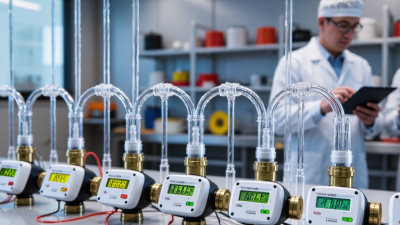
Accuracy depends on more than the advertised percentage. Check the minimum flow rate, pressure range, temperature limits, and error performance under uneven demand. A meter that reads accurately in a laboratory may behave differently beside an old valve or partially filled pipe. Ask suppliers for test reports, calibration procedures, and clear standards. I have found that unclear data sheets create more risk than slightly higher purchase prices. No meter is perfect. Installation still matters.

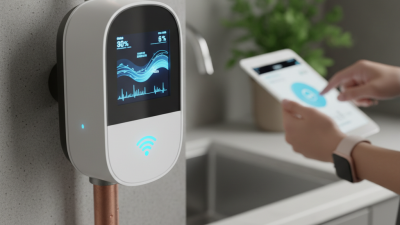
Tips: Compare meters using the same flow conditions. Request samples before a large order. Test readings at low, normal, and peak flow. Review battery life, data storage, remote shutoff options, and communication compatibility. Cellular, radio, or mesh connectivity may work differently across countries and buildings. Confirm local network support before selecting smart features. A useful dashboard should show leaks, reverse flow, and unusual night consumption, not merely display numbers. Also check firmware updates, cybersecurity controls, warranty terms, and replacement access. Smart functions sound impressive, but unnecessary features can increase cost and training time.

Evaluate Compatibility with Local Water Systems

How to Choose a Digital Water Meter for Global Sourcing?

When sourcing a digital water meter globally, compatibility with the local water system matters more than a polished specification sheet. Check connection standards, pipe diameter, installation direction, and available clearance. A meter that fits a catalog may not fit a crowded valve box. Measure the actual site, not only the drawings. Local pressure also deserves careful attention. Some networks face sudden surges, while others operate below the meter’s ideal range. Ask for verified accuracy curves across expected flow conditions. Test the range.

Water quality can change device performance. Sediment, air bubbles, mineral deposits, and disinfectant levels may affect sensors or seals. Review the meter’s materials and ingress protection against local conditions. In colder regions, freezing risk needs protection. In hot areas, cabinet temperatures may exceed published limits. Communication compatibility is equally practical. Confirm support for the utility’s preferred radio, cellular, wired, or pulse interface. Check data formats, cybersecurity controls, and offline storage. A reliable reading is useless if the local platform cannot receive it.

Work with local installers and water authorities before placing a large order. They can confirm approval procedures, tamper requirements, testing methods, and maintenance access. Request installation records from comparable climates, not generic laboratory claims. A small pilot can reveal pressure noise, weak signals, or unexpected valve layouts. Field conditions differ. Procurement teams often focus heavily on unit price, then underestimate adapters, commissioning, and training. That mistake is expensive. Leave room for revision, because one successful test may still hide local compatibility problems.

How to Choose a Digital Water Meter for Global Sourcing?

Evaluate Compatibility with Local Water Systems

What the chart shows: Common nominal connection sizes used when matching a digital water meter to local pipe systems. DN values are nominal designations in millimetres, while the inch values are approximate pipe-size equivalents.

Before sourcing, confirm the local connection standard, thread or flange type, installation length, pressure range, flow range, water quality, and communication requirements. Nominal size does not represent the meter’s actual internal bore or guaranteed flow capacity.

Check Certifications, Connectivity, and Data Security

How to Choose a Digital Water Meter for Global Sourcing?

Certification should match the installation country, not merely the factory’s export market. Check metrology approval, radio compliance, electrical safety, and environmental ratings. Ask for current certificates, test reports, issuing bodies, and model numbers. A copied certificate can create costly delays. Paper is not proof.

Connectivity needs practical testing. Confirm whether the meter uses cellular, LoRaWAN, Wi-Fi, or a hybrid design. Review coverage at underground chambers, thick concrete walls, and remote pump stations. Ask about roaming, SIM ownership, battery life, and offline storage. Test the signal. A meter that reports reliably in a warehouse may fail beside a flooded roadside cabinet. This is where specifications often look better than field results.

Data security deserves the same attention as measurement accuracy. Require encrypted communication, authenticated devices, role-based access, and secure firmware updates. Clarify where readings are stored and how long they remain accessible. Check whether the supplier can provide vulnerability handling, audit logs, backup procedures, and a clear incident response process. Request API documentation before signing. Integration problems can appear months later. I would also ask for a pilot batch, even when certification looks complete. It adds time, but it exposes weak connectivity, confusing dashboards, and unstable batteries early. No checklist catches everything.

Assess Suppliers, Total Cost, and Long-Term Support

How to Choose a Digital Water Meter for Global Sourcing?

Assess Suppliers, Total Cost, and Long-Term Support

A capable supplier should provide traceable test records, clear specifications, and stable production controls. Ask how each meter handles pressure changes, condensation, sediment, and outdoor installation. Request sample units for independent testing before placing a large order. Check measurement accuracy across low, medium, and peak flow rates. Small errors can become expensive across thousands of meters.

Look beyond the purchase price. Include shipping, customs handling, software integration, installation labor, batteries, calibration, and replacement parts. A cheaper meter may require extra gateways or manual readings. That difference matters. Build a three-year cost model using realistic service intervals. Do not rely only on the supplier’s spreadsheet. Verify assumptions with technicians and local operators.

Long-term support deserves equal attention. Confirm response times, firmware update procedures, training materials, and spare-part availability in each target market. Ask whether the supplier can support multiple communication standards without forcing unnecessary hardware changes. Review the warranty carefully, including exclusions and battery coverage. Written commitments are safer than friendly promises. Still, documentation may not reveal everything. A supplier can appear organized during evaluation and struggle after delivery. Start with a controlled pilot, record failures, and measure support performance. Perfect sourcing decisions are rare. Careful review reduces unpleasant surprises.

FrenchBulgaria