How to Choose the Best Flat Laminating Machine in 2026?
Choosing the best Flat Laminating Machine in 2026 requires more than comparing pressure, speed, or purchase price. The decision begins with the material on your worktable. Paperboard, printed film, aluminum foil, and technical textiles can require different rollers, adhesives, heating zones, and cooling systems. A glossy pouch may look perfect outside, yet fail after folding if bonding is uneven.
Industry evidence supports this careful approach. Smithers’ 2024 packaging outlook highlights sustainability, lightweighting, and improved barrier performance as major market drivers. These trends increase demand for precise, low-waste laminating processes. Grand View Research also identifies automation, energy efficiency, and digital controls as important developments in industrial laminating equipment. However, broad market reports rarely separate flat laminators from every other machine category. That limitation matters.
Dr. Susan Selke, a respected packaging materials expert, has emphasized a practical principle: “Material compatibility is the foundation of successful packaging.” Her point applies directly here. The strongest machine is not always the fastest one. It is the machine that maintains stable pressure, accurate temperature, and consistent web alignment across your real production materials. Measure a finished sheet. Check its edges, bond strength, curl, and surface marks. Small defects become expensive at scale.
This guide compares those details, including working width, heating control, roller design, safety features, maintenance access, and energy use. Some specifications look impressive on paper. They may disappoint in daily production. That is worth remembering.
What Is a Flat Laminating Machine and How Does It Work?
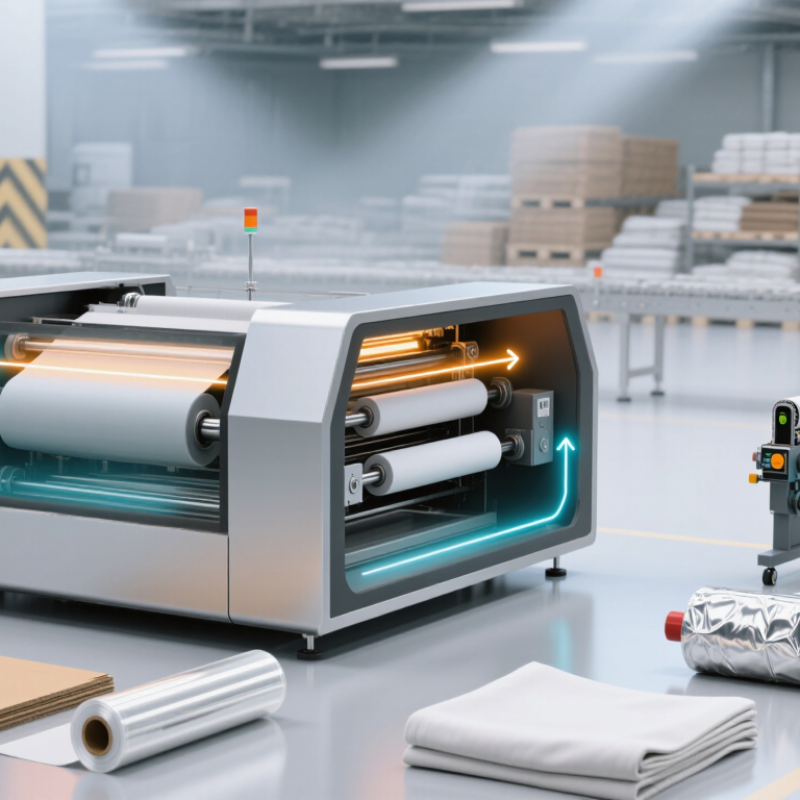
A flat laminating machine bonds a protective film to a flat sheet, usually paper, card, photograph, or printed board. It is a sheet-finishing system. The operator places the sheet on a level bed, aligns the film, and feeds both materials through heated rollers or a heated platen. Pressure removes air pockets. Heat activates the adhesive, while cooling stabilizes the bond. Some machines use thermal film; others apply liquid adhesive before pressing the layers together.
The working sequence is simple, but small settings matter. Film tension must stay even. Excessive heat can curl a printed sheet, while weak pressure can leave silvering or bubbles. In my experience, a test sheet often reveals more than a specification table. Check maximum sheet size, heating range, roller pressure, warm-up time, and temperature accuracy. A practical machine should also support easy cleaning and safe film loading.
Market data explains why finishing deserves attention. Grand View Research estimated the global commercial printing market at about USD 489 billion in 2023. Smithers has also identified packaging and specialty print as important growth areas for digital production. These figures do not guarantee demand for every laminator. They do suggest that reliable surface protection can reduce reprints and improve perceived quality. I would compare actual output samples, not only speed claims. Faster is not always better. A modest machine may suit short runs, but high-volume work needs stable feeding, repeatable pressure, and serviceable heating components.
How to Compare Machine Size, Speed, Temperature, and Pressure
How to Choose the Best Flat Laminating Machine in 2026?
Machine size should match your usual materials, not your largest occasional project. Measure the widest sheet, then leave extra space for accurate alignment. A compact machine suits labels, cards, and small signs. Larger equipment handles panels, boards, and repeated production work. Check the installation area too. Allow room for feeding and unloading. I once underestimated rear clearance, which made long sheets awkward to handle.
Speed requires careful comparison. Manufacturers may list maximum speed under ideal conditions. Real output depends on film thickness, adhesive type, and operator handling. Ask for a practical speed range, not one impressive number. For small batches, stable feeding may matter more than maximum meters per minute. Watch the first few sheets for wrinkles, silvering, or uneven bonding.
Temperature and pressure must work together. Higher heat does not always improve results. Excessive heat can distort sensitive films or damage printed surfaces. Choose equipment with adjustable temperature control and clear sensor feedback. Pressure should be even across the working width. Test several settings on actual materials before production. Record the temperature, pressure, speed, and results. Useful records prevent repeated mistakes.
Calibration also matters. A displayed setting may differ slightly from the surface temperature. That detail is easy to miss. Ask whether technicians can verify sensors and rollers regularly. A reliable machine is not simply fast; it produces consistent, measurable results during ordinary daily use.
What Safety, Maintenance, and Operating Features Matter Most?
How to Choose the Best Flat Laminating Machine in 2026?
What Safety, Maintenance, and Operating Features Matter Most?
A reliable flat laminating machine should make hazards visible before production begins. Look for fixed guards around rollers and clear protection near heated surfaces. An accessible emergency-stop button matters, especially when hands approach the feed area. Door interlocks can prevent operation during cleaning or adjustment. These details are easy to overlook.
Temperature control should remain stable across the working surface. Uneven heat can create bubbles, weak bonding, or damaged materials. Adjustable pressure and line speed also help operators match different film and substrate combinations. A readable display is useful, but physical controls should remain understandable during a fault. Simple is safer.
Maintenance features often decide long-term performance. Choose a machine with accessible rollers, removable trays, and clearly marked lubrication points. Daily cleaning should not require dismantling half the machine. Inspect rollers for adhesive residue, cuts, or uneven wear. Small defects can leave repeated marks across every sheet. Keep service records.
Do not trust automation blindly. Sensors can drift, and operators can misunderstand settings. Regular temperature checks with a calibrated instrument add confidence. Training should cover pinch points, hot surfaces, emergency stops, and safe isolation before servicing. A machine may meet specifications yet still perform poorly in a careless workflow. That part deserves honest review.
How to Select the Best Machine for Your Budget and Production Needs
How to Choose the Best Flat Laminating Machine in 2026?
Selecting the right flat laminating machine starts with your actual workload, not the lowest price. Measure daily output, sheet dimensions, material thickness, and peak production hours. A compact machine may suit short runs, prototypes, and limited workshop space. Larger equipment becomes practical when orders are steady and repeatable.
During machine evaluations, I check heating consistency, roller pressure, alignment, and feeding speed. These details affect finish quality more than attractive specifications. Ask whether one operator can load sheets safely without slowing production. Check power requirements, replacement parts, cleaning access, and technical support before approving the purchase. Reliability matters.
Small details matter.
Your budget should include installation, training, maintenance, and wasted material during setup. My first cost estimates are often too optimistic. A cheaper machine can demand more manual adjustments and create hidden labor costs. On the other hand, advanced automation may remain unused in a low-volume workshop. Compare total operating cost over three to five years, not only the invoice.
Request sample testing with your own films, boards, and largest regular sheets. Record cycle time, surface uniformity, temperature recovery, and operator effort. Leave room for future growth, but avoid paying for capacity you cannot realistically use. The best choice balances acceptable quality, manageable operating costs, and production demands you can verify.



