How to Choose the Best Power Monitor in 2026?
How do you choose the best power monitor in 2026 when every specification looks impressive? The answer begins with measurement, not marketing. A reliable power monitor should show voltage, current, active power, energy use, power factor, and useful trends. It should also explain accuracy under changing loads, from a quiet laptop charger to a workshop motor.
Real-world selection is less tidy. A device may promise high precision but offer a confusing app. Another may provide excellent local readings yet lack useful export tools. During evaluation, install the monitor at the actual circuit, allow stable operating conditions, and compare readings with a trusted reference meter. Record standby consumption, short spikes, communication delays, and behavior after a network outage. Small details matter. A bright display helps in a dim utility room. Clear timestamps help when energy bills look wrong.
Safety and evidence should guide the final decision. Check installation requirements, measurement limits, enclosure quality, data security, and independent test documentation. For fixed wiring, use a qualified electrician and follow applicable local standards. Wireless features deserve scrutiny too. Convenience is not reliability.
There is no universal winner. That conclusion sounds simple, but it is difficult to accept. The best power monitor depends on your circuit, budget, technical skill, and purpose. This guide compares those factors for 2026 while acknowledging an uncomfortable truth: published specifications cannot predict every home, factory, or weather condition. Use the numbers, inspect the details, and leave room for verification.
Define What a Power Monitor Measures and Why It Matters
How to Choose the Best Power Monitor in 2026?
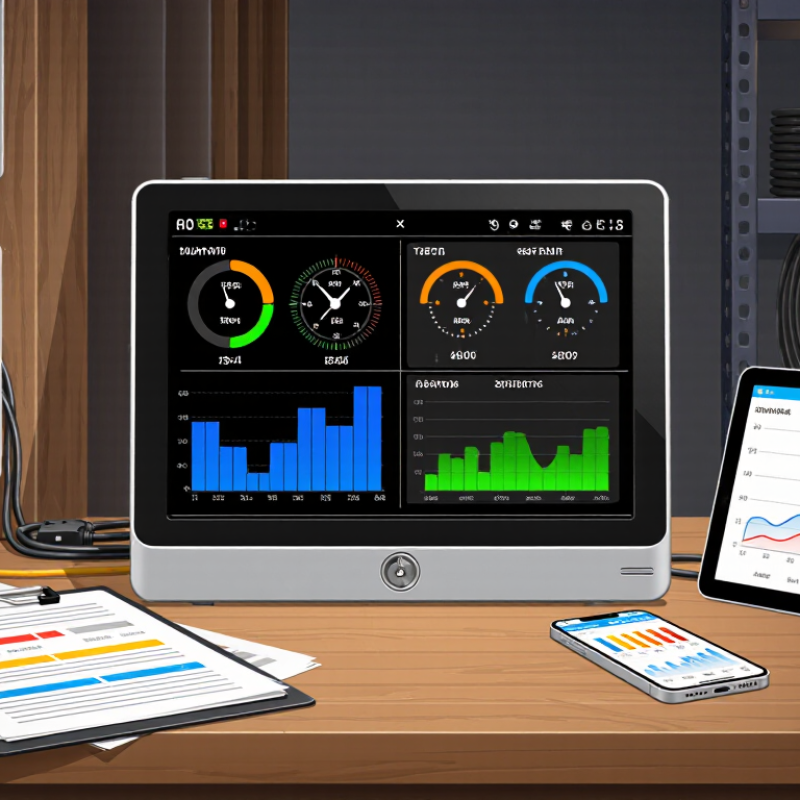
A power monitor measures the electrical conditions inside a circuit. Its core readings include voltage, current, active power, energy consumption, and frequency. Some advanced instruments also measure power factor, phase imbalance, and harmonic distortion. These values explain not only how much electricity equipment uses, but also how steadily and safely it operates.
The measurement point matters. A monitor installed at a distribution panel can reveal a building’s overall demand, while one placed near a motor shows equipment-specific behavior. For example, a device may draw 8 kilowatts during startup, then settle at 3 kilowatts during normal operation.
That difference can expose oversized loads, inefficient schedules, or unexpected faults. Accuracy also depends on sensor quality, correct installation, sampling speed, and regular calibration. A high resolution display cannot repair a poorly fitted current transformer.
Choose the monitor according to the question you need answered. Energy cost analysis may require accurate kilowatt-hour readings and data logging. Troubleshooting may demand fast waveform capture and harmonic analysis. Remote sites need dependable communication and clear alerts.
Safety deserves attention too; installation should follow applicable electrical standards and use properly rated equipment. No monitor is perfect. I have found that clean-looking data can still mislead when sensors are misplaced or loads change quickly. Review the measurement range, accuracy specification, update rate, and software before purchasing. The cheapest option may measure power, but not the detail behind it.
Compare Power Monitor Types, Features, and Measurement Accuracy
Choosing a power monitor in 2026 starts with measurement purpose, not screen size. A smart plug tracks one appliance, while a panel meter measures circuits or an entire building. Clamp sensors install quickly and avoid conductor disconnection. Shunt-based meters can provide stronger accuracy, but installation is more intrusive. Rogowski coils suit crowded panels, although they need correct positioning and signal integration. The IEA’s Electricity 2024 report projects global electricity demand to grow by about 3.4% annually through 2026. Better visibility is becoming practical, not optional.
Measurement accuracy depends on more than the stated percentage. Check true-RMS performance, current range, sampling rate, phase-angle handling, and power-factor accuracy. IEC 61557-12 provides performance requirements for power-monitoring devices, including measurement functions and uncertainty considerations. A monitor rated at 0.5% may perform worse near its lowest current range. That detail is easy to miss. In field testing, loose clamps, distorted waveforms, and unbalanced phases can create misleading readings. Calibration records matter, especially when data supports energy audits or ISO 50001 programs.
Tips: Match the sensor to the load first. For motors, verify power factor and starting-current capture. For office circuits, test low-load accuracy during evenings. Ask for calibration evidence, not marketing claims. Compare readings with a trusted reference meter for several operating cycles. No meter is perfect. Even experienced technicians can overlook installation error. Choose models that export raw data, show uncertainty, and retain timestamps during network interruptions.
Match Monitor Specifications to Your Devices and Energy Goals
How to Choose the Best Power Monitor in 2026?
Match Monitor Specifications to Your Devices and Energy Goals
When choosing a power monitor in 2026, start with your devices, not a feature list. A desktop workstation may need voltage, current, real-time watts, and cumulative kilowatt-hours. A phone charger usually needs less. Check the monitor’s maximum load, measurement range, plug type, and display readability before connecting equipment. A bright screen helps in a dim utility room.
Your energy goal should shape the data you collect. To find standby waste, choose a model that records low power over several hours. To investigate a heater, select a monitor rated for its sustained load, with overload protection and clear safety instructions. For household comparisons, useful accuracy matters more than excessive decimal places. Look for published accuracy limits, calibration information, and test conditions. Independent reviews can reveal problems that product sheets omit.
Use the monitor during real routines. Record a refrigerator across a full cycle, or measure a computer during sleep, work, and charging. Keep a simple log with time, watts, and room temperature. Readings can drift. Cables, adapters, and changing device settings also affect results. I once treated a brief power spike as normal consumption; that was a poor assumption. Repeating the test would have been wiser. Choose a device you can understand, verify, and safely use, even if its interface feels less impressive.
How to Choose the Best Power Monitor in 2026?
Match the monitor’s measurement range and maximum load rating to the devices you want to measure. The examples below use representative operating power levels for common household and office devices.
Choose a monitor with a rated capacity above the device’s maximum expected load. Actual consumption varies by model, operating mode, duty cycle, and startup surge, especially for refrigerators, microwaves, and heating appliances.
Evaluate Connectivity, Software, Installation, and Data Security
Choosing the best power monitor in 2026 requires more than advertised accuracy. The Electricity 2024 report projects data-centre electricity demand could exceed 1,000 TWh by 2026. That pressure makes reliable measurement essential. Look for wired Ethernet, secure wireless options, and open protocols such as Modbus or MQTT. Cellular backup can preserve alerts when local networks fail. It happens.
Software should turn readings into decisions, not colorful confusion.
Choose platforms with exportable data, documented APIs, role-based access, and adjustable alarms. The 2025 Data Breach Investigations Report found third-party involvement in breaches had doubled to 30%. Therefore, review vendor access, encryption, multi-factor authentication, firmware updates, and audit logs. Data retention and storage location also deserve direct questions. A dashboard without traceable records is difficult to defend.
Installation quality affects every later calculation. Split-core sensors can reduce downtime, but incorrect phase labeling can distort load readings. Require clear wiring diagrams, calibration records, and a commissioning test under real operating conditions. The monitor should show timestamps, sensor status, and communication failures.
I still distrust systems that report perfect data during outages. That may be confidence, or simply missing evidence. Choose equipment that lets engineers inspect raw values and correct errors without hiding inconvenient measurements.