China Top 10 Chicken Injector Manufacturers for Global Buyers
Global poultry production is expanding, and efficient marination equipment is becoming increasingly important. The USDA Foreign Agricultural Service estimated global broiler production at approximately 103 million metric tons in 2024. The OECD-FAO Agricultural Outlook 2024–2033 also identifies poultry as the fastest-growing major meat category. Behind these figures, processors need equipment that can inject brine evenly, reduce product loss, and maintain consistent texture across large batches.
This is where a reliable Chicken Injector becomes valuable. A modern machine may use multiple needles, adjustable injection pressure, and stainless-steel contact surfaces. These details matter on a busy production line. A stable conveyor can improve throughput, while a well-designed brine circulation system may reduce waste and cleaning time. Small differences become expensive.
China has developed a broad manufacturing base for poultry and meat-processing machinery. The country offers compact units for medium-sized processors and automated systems for export-oriented plants. However, supplier quality is not uniform. That point deserves attention. A polished catalog does not always prove manufacturing capability.
This guide reviews China’s top 10 Chicken Injector manufacturers for global buyers. The selection considers production experience, machine configuration, food-contact materials, after-sales support, export performance, and documentation. Buyers should also verify CE, electrical, sanitation, and local compliance requirements before ordering. These checks are practical, not decorative.
A ranking cannot capture every factory’s strengths. Some companies excel in customization, while others provide stronger automation or faster spare-parts support. Therefore, readers should treat this list as a starting point, not a final purchasing decision. Product trials and reference checks remain essential.
What Chicken Injectors Are and Why Global Buyers Use Them
What Chicken Injectors Are and Why Global Buyers Use Them
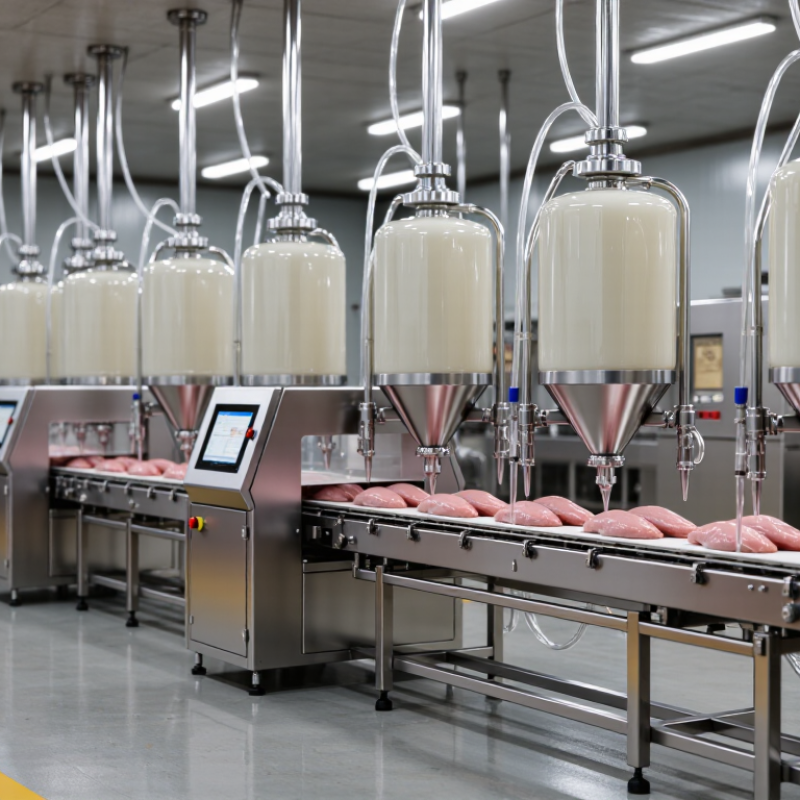
Chicken injectors are food-processing machines that push seasoned brine, marinade, or water into poultry meat. They use multiple hollow needles, controlled pressure, and adjustable injection speed. This process improves moisture, flavor distribution, and product consistency. It also reduces uneven seasoning found in manual handling.
Global buyers often choose injectors for higher production capacity and repeatable results. A small processor may need a compact machine with simple cleaning access. A large facility may require wider conveyors, more needles, and accurate brine recovery. Stainless steel construction, sealed controls, and removable parts support daily hygiene routines. Buyers should also check electrical standards, spare-part supply, operator training, and local food-safety requirements. These details can matter more than output claims.
Tips: Test the machine with your actual chicken size and marinade viscosity. Inspect needle spacing, pressure stability, and cleaning time. Ask for documented food-contact materials and factory test records. Do not rely only on catalog capacity. A machine can perform well in a demonstration, yet struggle with sticky seasoning or irregular fillets. That gap deserves attention. Clear maintenance instructions and responsive technical support can protect production continuity. Still, every facility has different limits, so a careful trial remains necessary.
Common Chicken Injector Needle Configurations Used by Global Buyers
Chicken injectors introduce brine, marinade, or seasoning into poultry meat. Needle counts commonly range from single-needle units for small-scale processing to multi-needle systems for high-throughput production.
The chart shows representative needle-count configurations commonly available in poultry injection equipment. Actual configurations, injection capacity, and product compatibility vary by machine design and processing requirements.
How to Evaluate China’s Chicken Injector Manufacturers
China Top 10 Chicken Injector Manufacturers for Global Buyers
When evaluating China’s chicken injector manufacturers, start with process evidence, not polished catalogs. The OECD-FAO Agricultural Outlook 2024-2033 projects continued growth in global poultry consumption, increasing pressure for stable marination and higher production efficiency. Ask for injection-rate data, pressure ranges, and yield tests using your actual chicken size. A serious factory should explain brine circulation, needle spacing, conveyor speed, and temperature control. Request stainless-steel specifications for product-contact parts, plus cleaning instructions and replacement-part availability. Small details matter.
Factory audits reveal more than websites. Check whether operators record calibration results and sanitation checks. Review quality systems, traceability procedures, inspection reports, and export experience. ISO 9001 supports process control, but it does not prove hygienic equipment design. The U.S. Food and Drug Administration’s Food Code stresses cleanable, corrosion-resistant food-contact surfaces; use that principle when reviewing welds, corners, seals, and drainage. Published figures can vary. Your trial data matters more.
Tips: Ask for a video factory inspection and a live acceptance test. Measure brine distribution across breasts, legs, and irregular cuts. Compare target injection gain with actual gain after resting and weighing. Check noise, water use, cleaning time, and emergency-stop response. Do not accept “high efficiency” without numbers. I would also buy a small spare-parts kit. It may feel excessive, but downtime is expensive. One overlooked weakness is service response after installation. Ask for response times in writing.
Key Standards, Features, and Customization Options to Compare
When comparing China’s top chicken injector manufacturers, global buyers should examine standards before attractive output figures. Food-contact parts should use traceable stainless steel, commonly 304 or 316 grades. Welds must be smooth, with no hidden gaps that trap protein residue. Ask for material certificates, electrical safety documents, and clear cleaning procedures. Certifications help, but an unannounced factory video cannot replace an audit.
Performance depends on more than needle quantity. Check injection accuracy, brine pressure stability, conveyor speed, and product thickness tolerance. A reliable machine should maintain even distribution across breast meat, thighs, and irregular cuts. Test samples with real brine, not only water. Measure weight gain at several positions. Small deviations can become expensive.
Customization should cover voltage, conveyor width, needle spacing, pump capacity, control language, and recipe storage. Request drawings before production. Confirm whether operators can remove needles without special tools. One practical detail matters: can the machine fit through your existing doorway? Buyers should also review spare-part availability, remote support, training, and factory acceptance testing. I have seen technically impressive machines fail because their washing cycle was too slow. That weakness is easy to miss during a short demonstration.
How Global Buyers Can Select and Purchase the Right Supplier
China Top 10 Chicken Injector Manufacturers for Global Buyers
Global poultry demand is rising, but purchasing equipment requires more than comparing prices. The OECD-FAO Agricultural Outlook 2024-2033 expects poultry to provide about 52% of additional global meat production by 2033. This growth increases pressure on injection accuracy, sanitation, and production uptime. Buyers should compare the top ten manufacturers through documented evidence, not attractive catalogs.
Request production videos, test reports, and references from similar poultry plants. During a factory audit, inspect stainless-steel welds, needle alignment, pump stability, and cleaning access. Ask for brine distribution results at different product temperatures. Small gaps matter. A supplier should explain injection percentage, conveyor speed, pressure control, and expected maintenance intervals. ISO 22000-based food-safety procedures and applicable electrical conformity documents should also be verified locally. Certificates without traceable test records deserve careful questioning.
The WHO estimates that contaminated food causes about 600 million illnesses annually. Therefore, hygienic design is a purchasing requirement, not a marketing detail. Check whether product-contact parts are removable, corrosion-resistant, and compatible with approved cleaning chemicals. Confirm spare-parts availability, technician response times, training, and warranty limits in writing. The Codex General Principles of Food Hygiene can support this review. A lower quotation may hide shipping delays, difficult cleaning, or expensive replacement needles. Buyers should calculate total ownership cost over five years. That estimate will not be perfect, but it is more useful than a showroom promise.



