NOTICE
We use cookies to improve the user experience and analyze its performance.
Global sourcing of Aluminum Precision Parts is not just a search for the lowest unit price. Buyers must compare tolerances, material grades, machining capability, inspection methods, and delivery reliability. A drawing may show a 0.02-millimeter tolerance, but the supplier’s measurement process determines whether that number is repeatable. Small details matter.
Metallurgist and casting expert Dr. John Campbell has emphasized, “The quality of a casting is determined by the quality of the liquid metal.” That principle is useful when evaluating suppliers, though it is only one part of the picture. A capable partner should also explain alloy selection, heat treatment, surface finishing, and how defects are detected. Ask for sample inspection records, not just a polished capability statement. Look closely.
This guide reviews seven suppliers serving global buyers, with attention to production strengths, quality systems, communication, and export experience. Some companies excel at complex CNC machining; others may offer stronger value for repeat orders or integrated finishing. No supplier is ideal for every project. And a glossy website proves little. Use the comparisons as a starting point, then verify certifications, sample parts, and production controls directly. A little skepticism is healthy.
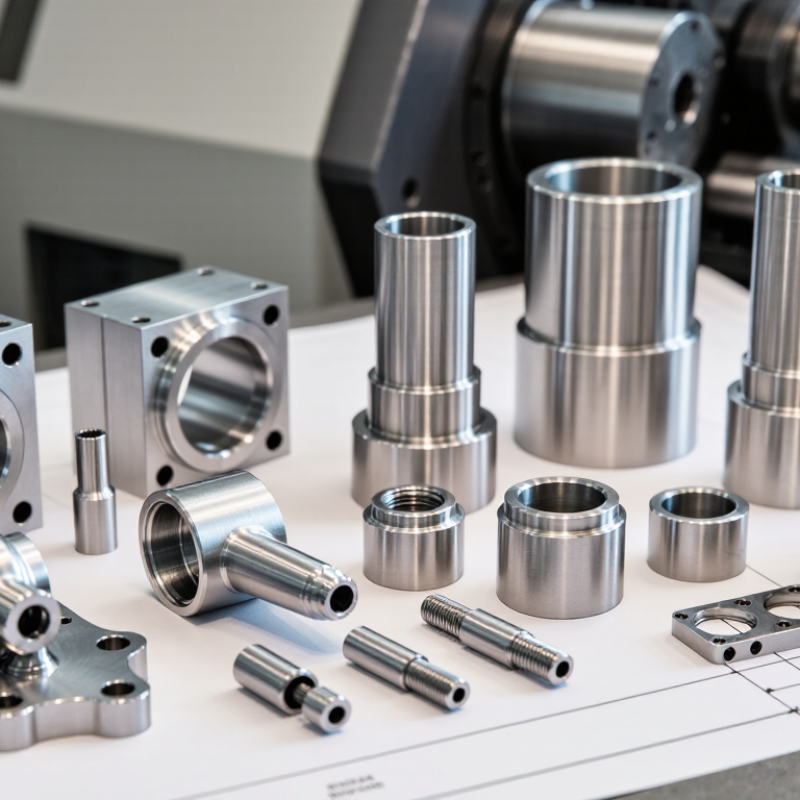
A reliable aluminum precision parts supplier proves control at every step, not just with a polished quotation. Ask how the shop measures critical features, manages tool wear, and handles out-of-tolerance parts. A capable supplier can show inspection records tied to the drawing revision, material certificates, and calibration status for measuring equipment. Look for practical details: a bore checked with a calibrated gauge, a flatness result recorded against the specified datum, and a clear response when a feature drifts. Small evidence matters.
Material sourcing deserves equal attention. The International Aluminium Institute reports that recycling aluminum can save up to 95% of the energy required to produce primary aluminum. That figure is useful, but it does not prove that a particular batch meets your specification. Request alloy and temper documentation, plus lot-level traceability where the application requires it. Ask who verifies incoming stock. Then check whether the supplier can keep batches separated through machining and packing. Easy to overlook.
Communication is another test of capability. Share a sample drawing and ask the supplier to identify tolerance risks, finishing allowances, and inspection points before production. A thoughtful review may reveal a weak datum or an unrealistic tolerance. Not every concern has a neat answer; that is worth noticing. Reliable suppliers explain limits, provide measurable evidence, and describe corrective actions without promising perfection.

When comparing aluminum precision parts suppliers, begin with evidence, not polished capability lists. Request recent inspection reports showing dimensional results, sampling methods, and calibration dates. For a milled housing, check whether the supplier measures bore diameter, flatness, and hole position against the same drawing revision. Ask how they control alloy certificates and material lot traceability. ISO 9001 certification can indicate a quality management system, but it does not prove that every part meets your tolerances. Ask for process-specific evidence.
Global delivery deserves equal scrutiny. The World Bank’s 2023 Logistics Performance Index compares countries across six areas, including customs, infrastructure, shipment arrangements, tracking, and timeliness. These indicators help frame questions about a supplier’s shipping route and contingency plans. UNCTAD’s Review of Maritime Transport 2023 notes that shipping carries over 80% of world trade by volume, so port disruptions can affect lead times. Ask for realistic production and transit estimates, packaging details, and the named party responsible for export documents. Small details matter.
Compare total landed cost, not just the unit quotation. Include tooling, inspection, packaging, freight, and the cost of rejected parts. Request a sample run before committing to volume, then inspect parts using your own critical dimensions. A supplier may quote fast. Verify it. I would also record response times and corrective-action quality during the trial; this is imperfect evidence, but it often reveals more than a sales presentation.
Key criteria for comparing suppliers in the global market
Suggested buyer scorecard weights, totaling 100%. These are an evaluation framework, not measured results or rankings of specific suppliers. Compare documented quality systems, machining capabilities, inspection processes, certifications, lead times, communication, and total landed cost.
Aluminum precision suppliers differ in equipment, process control, and the work they handle in-house. CNC job shops suit small batches and complex features, such as thin walls or angled pockets. High-volume machining suppliers focus on repeatable cycles, fixture design, and inspection plans. Extrusion-integrated suppliers can machine profiles to length, adding slots or mounting holes while reducing material waste.
Die-casting suppliers produce near-net shapes for parts with ribs and bosses, then may provide trimming and surface finishing. Precision sheet-metal shops form enclosures and brackets, with laser cutting and controlled bending as common capabilities. Prototype specialists turn drawings into test parts quickly, though their pricing may not suit long production runs. Supply-chain integrators coordinate machining, finishing, and packaging across multiple facilities. Useful capability, but oversight matters.
Ask each supplier for material certificates, sample inspection reports, and documented tolerance limits. Compare the same drawing and revision. A clean-looking sample is not proof of stable production. Check burrs around cross-drilled holes, flatness after machining, and finish consistency between batches. A low quote can still hide outsourced steps or unclear inspection responsibilities. I have seen buyers focus on machine lists and overlook communication; that can be a costly gap. Verify details before committing.
Supplier location affects more than shipping time. A nearby aluminum precision parts supplier can simplify engineering calls, sample reviews, and urgent changes. A distant supplier may offer competitive capacity, but transit adds days and makes inspection coordination harder. Ask where machining, finishing, and final inspection actually happen; these steps may take place at separate facilities. Time-zone overlap matters, too. A two-hour call can resolve a drawing question faster than a long email chain.
Certifications are useful only when they match the work. Check whether the quality system is current and whether its scope covers the relevant production site. For tight-tolerance components, review inspection records, calibration practices, and how nonconforming parts are handled. A certificate alone cannot confirm consistent dimensions. Request a sample inspection report, then compare its measurements with the drawing’s critical features. Some suppliers provide detailed documentation; others offer only basic checks, so clarify expectations early.
Tips
Share a marked-up drawing and expected annual volume when requesting quotes. Ask about machining, deburring, surface finishing, packaging, and inspection as separate services. Confirm who manages revisions and how quickly they respond. A polished sales answer is reassuring, but it is not proof of production capability. We should admit that even a well-qualified supplier can make a poor first batch; a small pilot order can reveal gaps before they affect a larger shipment.
Global buyers should match an aluminum precision parts supplier to the job, not just the lowest quoted price. Start with the drawing: review alloy and temper, tolerances, surface finish, and annual volume. A bracket with broad tolerances has different needs from a thin housing with closely spaced holes. Ask how the supplier checks critical dimensions and handles revisions. A clear inspection plan matters. So does a realistic lead time.
Tips: Send a marked-up drawing and identify the dimensions that affect assembly. Request sample parts before approving a production run. Compare inspection records, material traceability, packaging, and communication—not only machining rates. For a tight tolerance, ask what measuring equipment is used and how often it is calibrated. If the answer is vague, pause.
Consider process fit, too. CNC machining suits complex features and changing designs, while other methods may suit larger, repeated orders. Confirm that the supplier can manage deburring, finishing, and protective packaging if these affect fit or transit. Ask for a small pilot batch when the design is new. It can reveal tool marks, burrs, or fit issues before more parts are made. One imperfect detail: buyers sometimes assume a polished sample predicts every production batch. It does not. Keep acceptance criteria written and review the first articles against them.
A practical comparison of seven supplier profiles. These are supplier types, not named companies or verified rankings; capabilities and commercial terms must be confirmed directly for each quotation.
| Supplier Profile | Best Project Fit | Common Processes | Suitable Order Pattern | Key Verification Points | Global-Buyer Considerations | When to Shortlist |
|---|---|---|---|---|---|---|
| Prototype-focused CNC job shop | Design validation, engineering samples, and parts that may change during development. | CNC milling and turning; deburring; basic inspection; finish coordination when available. | One-off parts and small prototype batches; confirm minimum charges and repeat-order terms. | Material grade and temper, drawing revision control, inspection report format, and ability to flag manufacturability issues. | Request a clearly stated shipping method, export packaging, and a quote that separates machining, finishing, and freight. | Shortlist when engineering feedback and quick design iterations matter more than unit-price optimization. |
| General-purpose precision CNC manufacturer | Industrial components, brackets, housings, and machined parts with established drawings. | 3-axis and 4-axis milling, turning, drilling, tapping, and standard surface finishing. | Prototype through recurring production; capacity depends on machine availability and part complexity. | Machine envelope, workholding approach, critical-feature measurement, process controls, and documented inspection capability. | Confirm applicable quality-system certification directly and specify units, datums, tolerances, and packaging in the purchase documents. | Shortlist when a balanced combination of machining capability, repeatability, and production flexibility is needed. |
| High-precision, multi-axis machining specialist | Complex geometries, tight-tolerance interfaces, and parts requiring machining on multiple faces. | 4-axis or 5-axis CNC milling, precision turning, probing, and coordinate-measuring inspection as equipped. | Low-to-medium volumes or repeat work where setup and inspection demands justify specialist equipment. | Capability data for the specific feature and material; measurement uncertainty, inspection method, and tolerance stack review. | Agree on a measurement plan before production and ensure the supplier’s inspection report covers the drawing’s critical characteristics. | Shortlist when geometry, positional relationships, or inspection requirements exceed a standard job shop’s capabilities. |
| Aluminum extrusion and secondary-machining supplier | Long profiles, rails, frames, heat-sink forms, and parts suited to a consistent extruded cross-section. | Custom or standard extrusion, cutting, CNC secondary operations, drilling, and finishing coordination. | Recurring production; custom-die cost and minimum order quantities may affect smaller projects. | Alloy and temper availability, profile design review, die ownership and storage terms, straightness, and cut-length controls. | Confirm whether tooling charges are one-time or recurring, who owns the die, and how replacement tooling is handled. | Shortlist when the part has a repeated cross-section and extrusion may reduce machining time or material waste. |
| Sheet-metal and precision-fabrication supplier | Enclosures, panels, covers, trays, and lightweight formed aluminum assemblies. | Laser or waterjet cutting, punching, bending, welding, riveting, and finishing coordination. | Prototype and production batches; economical quantities depend on material utilization and setup. | Forming limits, bend radii, weld quality requirements, flatness, dimensional inspection, and assembly sequence. | Provide a 3D model and drawings with bend notes, cosmetic requirements, and any restrictions on weld appearance. | Shortlist when the part is primarily made from sheet or plate rather than a fully machined block. |
| Integrated machining and finishing supplier | Parts requiring controlled cosmetic appearance or multiple finishing operations after machining. | CNC machining combined with processes such as anodizing, conversion coating, bead blasting, or painting through in-house or qualified partners. | Prototype through repeat production; finishing capacity and color consistency should be checked for the intended volume. | Finish specification, masking locations, coating thickness impact, color reference, adhesion testing, and responsibility for nonconformance. | Clarify whether finishing is performed in-house or subcontracted and establish one party as accountable for the complete part. | Shortlist when finish appearance, corrosion protection, or coordination across multiple process steps is important. |
| Production-oriented contract manufacturer | Stable designs, planned replenishment, and programs that need controlled production and supply-chain coordination. | CNC machining or fabrication supported by production planning, inspection documentation, and supplier coordination. | Recurring medium-to-high volumes; suitability depends on forecast stability and capacity commitments. | Process-control documentation, traceability needs, change management, capacity evidence, corrective-action process, and continuity planning. | Agree on forecast rules, order lead-time definitions, Incoterms, inspection acceptance criteria, and change-notification requirements. | Shortlist when dependable repeat supply and formal production controls matter more than prototype-stage flexibility. |
Buyer note: No tolerance, lead time, certification, or price is guaranteed by supplier type alone. Confirm the specified aluminum alloy and temper, drawing revision, critical dimensions, inspection records, finishing requirements, packaging, delivery terms, and applicable compliance documents in a written quotation and purchase order.