NOTICE
We use cookies to improve the user experience and analyze its performance.
Choosing among the Top Warehouse Racking System Suppliers Worldwide requires more than comparing prices, photographs, or advertised load capacities. A reliable Warehouse Racking System must fit the building, product profile, handling equipment, labour patterns, and future growth. Pallet weight matters. So does aisle width. A few centimetres can affect forklift turning, picking speed, and daily safety.
James A. Tompkins, a respected supply-chain and warehouse-management authority, described the warehouse as “a critical component of the supply chain.” His observation remains practical today. Racking is not merely steel storage equipment. It shapes inventory visibility, travel distance, replenishment work, and emergency access. Strong suppliers therefore provide engineering calculations, installation guidance, inspection support, and clear documentation. They also ask uncomfortable questions. Will the system handle seasonal peaks? Can damaged beams be replaced quickly? Are operators trained to report impact?
The leading global suppliers differ in design depth, manufacturing scale, regional service, and customization. Some specialize in selective pallet racking. Others focus on drive-in, carton-flow, mobile, shuttle, or automated storage systems. The best choice is rarely the most impressive catalogue. It is the supplier that understands the actual warehouse floor.
That sounds obvious.
Yet many projects still begin with capacity alone. This is a weakness worth acknowledging. A cheaper system may create hidden costs through congestion, difficult maintenance, or poor adaptability. This guide examines major suppliers worldwide, their technologies, service capabilities, certifications, and practical suitability for different warehouse environments.
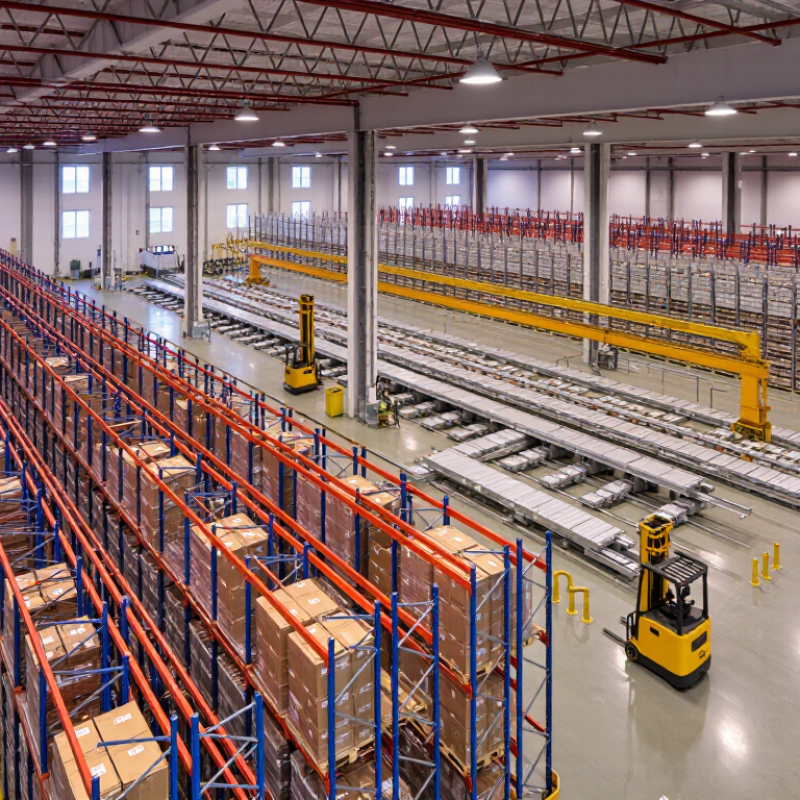
A warehouse racking system is a steel storage structure designed to organize goods vertically. It supports pallets, cartons, bins, and long materials while reducing unnecessary floor use. Unlike simple floor stacking, racking creates clear storage levels and defined movement paths. A well-planned system also improves stock visibility, picking speed, and workplace safety.
Safety comes first. Rack frames, beams, anchors, and load signs must match the stored weight and handling equipment. Selective pallet racking offers direct access to every pallet and suits varied inventory. Drive-in racking increases density but provides less individual access. Cantilever racking supports pipes, timber, and other long items. Mobile racking can save aisle space, although its cost and maintenance needs are higher.
Reliable suppliers should provide load calculations, layout drawings, installation guidance, and inspection support. Their recommendations should reflect ceiling height, floor capacity, pallet dimensions, forklift turning space, and local safety requirements. In real warehouses, small details matter. A single narrow aisle can slow daily operations. A poorly protected corner can create repeated damage. No layout is perfect. Storage demand changes, and early designs sometimes need revision after workers use the system. Regular inspections, visible load labels, and prompt repairs help maintain dependable performance over time.
Choosing warehouse racking system suppliers requires more than comparing prices. Start with load capacity, beam deflection, aisle width, and future expansion needs. Ask for stamped engineering calculations and test certificates. A reliable supplier should explain how the design handles forklifts, seismic risks, fire protection, and uneven floors.
MHI’s 2024 Annual Industry Report identifies artificial intelligence and automation as major supply chain investment priorities. This matters because racking increasingly connects with conveyors, scanners, and warehouse software.
Evaluate the supplier’s integration experience, not just its steel products. Request references from facilities with similar pallet weights and operating hours. Visit one site if possible. Photos can hide poor installation details. In my experience, unclear responsibility between the supplier and installer creates costly delays. That risk is easy to underestimate.
Tips: Compare total cost over ten years, including inspections, repairs, relocation, and spare parts. Check whether the supplier provides installation training and documented maintenance procedures. Confirm compliance with applicable safety standards, such as OSHA requirements in the United States, and require routine inspection guidance. The supplier should also state tolerances clearly. A perfect proposal is not always the best one; practical communication and honest limits often reveal stronger expertise. Before signing, test a sample bay with real pallets and forklift movements. Measure the results.
Warehouse racking suppliers are increasingly judged by regional coverage, not only product range. According to Grand View Research, the global warehouse racking market is projected to expand steadily through 2030, supported by e-commerce and distribution investment. Asia-Pacific remains a major growth center, with dense urban storage and expanding manufacturing networks. China, Southeast Asia, Japan, and India require different load ratings, building codes, and delivery models.
North America offers mature demand, especially for selective, drive-in, and automated storage systems. The U.S. market also emphasizes seismic design, forklift safety, and documented inspections. Europe remains highly regulated, with strong demand for energy-efficient facilities and adaptable layouts. Industry reports from Mordor Intelligence identify Europe and North America as important automation markets, while the Middle East is developing through logistics hubs and large-scale infrastructure projects.
Regional service matters.
A dependable supplier should provide engineering drawings, installation supervision, spare parts, and local technical support. In practice, buyers often underestimate customs delays, floor-level tolerances, and replacement lead times. That mistake can disrupt a warehouse for weeks. Global coverage does not always mean equal capability. A supplier may have excellent fabrication capacity but limited after-sales support in a distant market. Buyers should compare tested load data, compliance documentation, project references, and response times before selecting a partner. These checks are less impressive than glossy catalogs, but they reveal operational reliability.
Comparing racking solutions starts with warehouse behavior, not supplier reputation.
Selective pallet racking suits many SKUs with frequent access. It provides clear product visibility and simple stock control. However, it uses more aisle space.
High-volume warehouses may prefer drive-in racking. This design stores pallets deeply and supports fewer product lines. It can reduce picking speed when several batches share one lane.
Small parts operations often benefit from carton flow racks. Gravity rollers move cartons toward the picking face. That saves walking time, but replenishment discipline remains essential.
Cold storage, manufacturing, and irregular loads require different decisions.
Push-back racking offers better density than selective systems. It also needs careful pallet sequencing and trained operators.
Cantilever racks work well for timber, pipes, and long materials. Their arms must match both load length and weight distribution.
Mobile racking can recover floor space in restricted buildings. Yet, moving aisles may slow access during busy periods.
Real measurements matter more than catalog capacity. Check ceiling height, floor strength, aisle width, pallet dimensions, and sprinkler clearance. Local safety requirements should guide the final layout.
In practice, the neatest plan is not always the most productive. I have seen dense storage create longer picking routes. That mistake is easy to miss on a drawing.
Reliable suppliers should provide load calculations, installation records, inspection guidance, and operator training. Ask for realistic throughput estimates. Be cautious with perfect promises.
Warehouse demand changes, and racking should allow future adjustment where possible. A pilot bay can reveal problems before a full installation.
It may feel slower initially. It often prevents expensive rework.
Purchasing warehouse racking requires more than comparing steel prices. A reliable supplier should provide load calculations, layout drawings, material specifications, and installation records. MHI’s 2024 Annual Industry Report found that 83% of supply-chain professionals expect increased technology investment. That change can affect rack height, aisle width, and integration with automated equipment.
Installation quality matters immediately. Uprights must stand plumb, anchors must match the floor design, and beam locks should be visible after fitting. A practical acceptance check includes damaged components, uneven floors, pallet overhang, and clear evacuation routes. OSHA’s storage guidance requires materials to remain stable and secure. HSE’s HSG76 also stresses controlled traffic routes and competent installation. Small omissions become expensive later.
Safety does not end at handover. Operators should report impacts at once, even when damage looks minor. A trained person should inspect racking routinely, with formal inspections based on site risk. Maintenance records should identify rack location, defect type, repair date, and responsible staff. I would not treat an annual inspection as enough in a busy facility. Forklift traffic changes daily. The weak point may be an overlooked anchor, not the rack itself. MHI reports continuing workforce and operational pressures, so simple visual labels and disciplined loading rules remain valuable. Some purchasing decisions still focus too heavily on capacity and price. That is understandable, but incomplete.
| Evaluation Area | Data Dimension | Recommended Requirement or Benchmark | Information to Request from a Supplier | Verification Method | Priority |
|---|---|---|---|---|---|
| Purchasing | Storage configuration | The layout should match pallet dimensions, SKU count, inventory turnover, aisle width, forklift type, and required storage density. | A proposed layout showing bays, levels, clearances, aisles, loading areas, and emergency access routes. | Compare the design with warehouse drawings, pallet specifications, equipment data, and operational requirements. | Critical |
| Purchasing | Rack type selection | Selective pallet racking suits high SKU variety; drive-in supports high-density storage; double-deep, push-back, pallet flow, and mobile systems address specific throughput or density needs. | A written comparison of suitable rack types, capacity, selectivity, throughput, and operating limitations. | Check whether the proposed system supports the warehouse’s actual FIFO, LIFO, or batch-management requirements. | Critical |
| Purchasing | Load capacity | Every upright frame, beam level, connector, wire deck, and accessory must be rated for the intended uniformly distributed load and pallet configuration. | Stamped or signed load tables, design calculations, allowable beam deflection, and maximum bay capacity. | Confirm that capacity values are based on the actual beam spans, frame heights, bracing, pallet weights, and seismic conditions. | Critical |
| Purchasing | Material and finish | Steel grade, coating, paint system, galvanizing, corrosion resistance, and environmental suitability should be specified for the warehouse conditions. | Material certificates, coating specifications, corrosion-resistance details, and finish warranty terms. | Review certificates and inspect representative components before shipment or installation. | High |
| Purchasing | Standards and engineering compliance | The design should comply with applicable local building codes and recognized rack standards, such as ANSI/RMI MH16.1 or EN 15512, where applicable. | Engineering calculations, design basis, compliance statement, and details of the responsible structural engineer. | Obtain approval from the local authority or qualified structural engineer when required. | Critical |
| Purchasing | Seismic and environmental design | Seismic zone, wind exposure, floor slab condition, temperature, humidity, corrosion, and fire-protection requirements must be included in the design. | Site-specific design assumptions and required slab, anchoring, sprinkler, and clearance specifications. | Validate assumptions against site surveys, geotechnical information, building drawings, and local regulations. | Critical |
| Purchasing | Delivery and supply continuity | The supplier should provide a documented production schedule, packaging plan, spare-parts availability, and replacement-component support. | Lead time, shipping terms, quality-control milestones, spare-parts list, and contingency plan for delays. | Include measurable delivery milestones and remedies for non-conforming or delayed goods in the contract. | High |
| Installation | Installation method statement | Installation should be performed from approved drawings by trained personnel using a documented sequence, lifting plan, and temporary-stability controls. | Method statement, risk assessment, work schedule, equipment list, and installer qualification records. | Review documents before work begins and conduct daily site safety inspections. | Critical |
| Installation | Floor and anchorage requirements | The concrete slab must have adequate thickness, strength, levelness, and condition for the specified anchors and rack loads. | Anchor type, embedment depth, torque requirements, slab tolerances, and installation inspection procedure. | Inspect anchor locations, torque, embedment, damaged concrete, rack plumb, and baseplate contact. | Critical |
| Installation | Handover documentation | The completed system should be handed over with as-built drawings, load plaques, inspection records, manuals, and maintenance instructions. | Signed installation checklist, non-conformance log, as-built layout, component schedule, and operating instructions. | Release final payment only after document review and acceptance inspection. | High |
| Safety | Load identification | Capacity plaques must be visible at operating level and state allowable loads, beam levels, bay configuration, and any restrictions. | Plaque format, location plan, and process for updating ratings after any layout or loading change. | Verify plaques against approved engineering calculations and the installed configuration. | Critical |
| Safety | Impact protection | Column guards, end-of-aisle barriers, guardrails, backstops, and bollards should be used where forklift impact or falling-load exposure exists. | Protection layout, impact-rating information, anchoring details, and replacement specifications. | Inspect protection devices for secure anchoring, deformation, and adequate coverage of exposed members. | Critical |
| Safety | Pallet and load compatibility | Pallets must be suitable for the beam, support, wire-deck, pallet-flow, or drive-in arrangement and must not exceed rated dimensions or weight. | Pallet specifications, support conditions, maximum overhang, load stability limits, and approved load-unit examples. | Conduct a physical trial with representative pallets and the intended handling equipment. | Critical |
| Safety | Fire and emergency clearances | Rack layout must preserve required sprinkler clearance, fire exits, fire lanes, pedestrian routes, and access for emergency response. | Fire-protection coordination drawings and confirmation of required clearances under local codes. | Obtain approval from the fire-protection consultant or responsible authority before operation. | Critical |
| Safety | Inspection standard | A documented inspection program should identify damaged, displaced, overloaded, corroded, or unauthorized-modified components. | Inspection checklist based on applicable requirements, including EN 15635 or local equivalent where relevant. | Use trained internal inspectors and arrange periodic expert inspections at an interval defined by risk assessment and local rules. | Critical |
| Maintenance | Routine inspection frequency | Operators should perform visual checks during normal work, with formal documented inspections at a frequency determined by use, risk, and applicable regulations. | Inspection schedule, reporting forms, escalation procedure, and responsible-person training requirements. | Audit completed records and confirm that defects are tracked to closure. | Critical |
| Maintenance | Damage-response procedure | Damaged components should be unloaded, isolated, reported, and repaired or replaced using approved parts; field straightening or welding should not be performed without engineering approval. | Red-tag procedure, repair criteria, replacement-part identification, and engineering approval process. | Review incident records and verify that damaged racks are not returned to service without documented authorization. | Critical |
| Maintenance | Spare-parts and repair support | Common replacement items should remain identifiable and available, including beams, uprights, connectors, anchors, guards, and safety accessories. | Parts catalogue, identification system, minimum stock recommendations, warranty terms, and service response targets. | Test the ordering process and confirm compatibility of replacement components with the installed system. | High |
| Maintenance | Change management | Any change to beam levels, bay configuration, pallet weight, forklift type, aisle width, or building conditions should receive documented review before implementation. | Modification approval workflow, revised calculations, updated drawings, and new capacity plaques. | Audit changes against the approved configuration and maintain a controlled revision history. | Critical |
| Supplier Evaluation | After-sales service | A qualified local or regional service network should support inspections, repairs, training, documentation updates, and urgent damage response. | Service coverage by country or region, response times, technician qualifications, training options, and escalation contacts. | Request service references for comparable warehouse environments and review service-level agreements. | High |
| Supplier Evaluation | Total cost of ownership | The evaluation should include equipment, engineering, freight, installation, anchoring, protection, inspection, repairs, spare parts, downtime, and future expansion. | Itemized quotation, exclusions, warranty coverage, estimated maintenance cost, and expansion pricing. | Compare lifecycle cost rather than purchase price alone, using the same scope and capacity assumptions. | High |