NOTICE
We use cookies to improve the user experience and analyze its performance.
What Are the Top Mud Bricks Machine Types in 2026? This question matters as builders seek lower-carbon, locally sourced materials. The United Nations Environment Programme reported that buildings and construction produced 37% of global energy and process-related emissions in 2022. Mud bricks cannot solve that challenge alone. However, efficient production may reduce transport, waste, and fuel use.
The market is not perfectly defined. Most industry reports group Mud Bricks Machine products within broader construction equipment categories. Grand View Research valued the global construction equipment market at approximately USD 208.3 billion in 2023. It projects continued growth through 2030. That figure offers useful context, but it does not measure mud brick machinery directly. Readers should treat it carefully.
Gernot Minke, a leading earth-building researcher, stated, “Earth is the oldest and most widely used building material in the world.” His observation still shapes practical machine selection. Manual presses suit small projects and tight budgets. Hydraulic presses deliver denser, more consistent blocks. Fully automatic lines improve output, but they require trained operators and reliable maintenance. Mobile machines support rural sites, while interlocking-brick systems can reduce mortar use.
Real conditions matter.
This outline will compare these machine types through production speed, pressure, power consumption, mould flexibility, brick strength, and operating cost. It will also examine soil preparation, moisture control, and quality testing. Some claims in this sector remain inconsistent, especially when suppliers report capacity without explaining soil conditions. That gap deserves attention. A machine producing 2,000 bricks hourly on paper may perform very differently beside a dusty construction site.
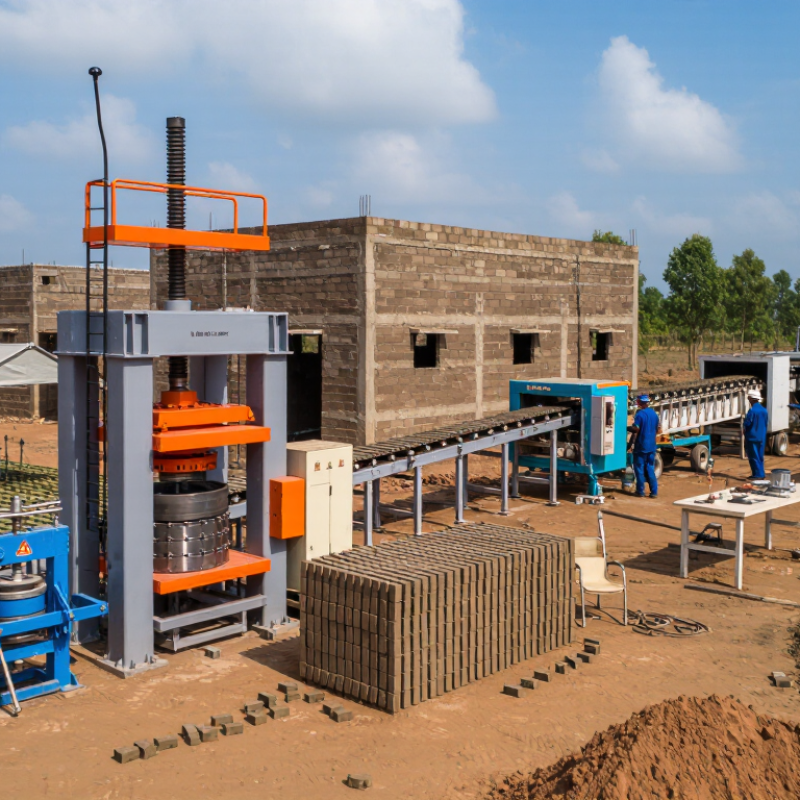
A modern mud brick machine in 2026 is more than a press with a larger motor. It must control soil moisture, compaction pressure, cycle time, and brick dimensions. In field trials, operators still check the mix by hand because clay can vary sharply across one site. That detail matters.
The machine should support interchangeable molds, hydraulic or electric drive options, and simple sensors for pressure and moisture. A practical system records each batch, reducing cracks caused by inconsistent water content.
According to the UN Environment Programme’s 2023 Global Status Report for Buildings and Construction, buildings and construction produced about 37% of global energy and process-related emissions in 2022.
Lower-energy forming therefore has real value, especially when local soil replaces long-distance materials.
Reliability also defines modern equipment. Dust control, guarded moving parts, emergency stops, and accessible maintenance points should be standard. The International Labour Organization emphasizes risk prevention through safer equipment design and worker training.
Yet automation is not a complete answer. A sensor may report correct pressure while poor soil preparation still weakens the brick. I would not trust impressive throughput figures without curing tests, dimensional checks, and breakage records.
A useful machine leaves clean edges, stable density, and fewer rejected units beside the production line.

In 2026, mud brick machines are becoming more practical for small construction teams and rural workshops. The main choice remains simple: manual or semi-automatic production. A manual machine uses human force to fill, compress, and release each mold. Operators can inspect soil texture closely. They also learn quickly when the mix feels too wet or sandy. Output is usually slower, often 300 to 800 bricks daily, depending on mold size, labor, and drying conditions. This method suits projects with limited electricity and flexible schedules.
A semi-automatic machine adds powered pressing or hydraulic assistance, while workers still feed soil and remove bricks. It can produce more consistent dimensions and reduce hand fatigue. Many small teams reach several hundred to over one thousand bricks daily, but actual output depends on cycle time and operator coordination. Moisture control becomes critical. A mix that looks correct may still crack after drying. A common field lesson is that production plans fail when curing losses are ignored. That mistake is easy to repeat.
Tips: Test a small batch before buying equipment. Record soil ratio, water volume, pressing time, and drying results. Choose manual equipment when repair access, power supply, or budget is uncertain. Choose semi-automatic equipment when steady volume and uniform size matter more. Keep the work area level. Clean the mold after each shift. Question impressive capacity claims; local soil and weather can change performance sharply.
What Are the Top Mud Bricks Machine Types in 2026?
Mud brick production now includes manual presses, semi-automatic machines, hydraulic systems, and fully automatic production lines. Manual presses suit small projects, but output depends heavily on operator strength and timing. Semi-automatic machines improve consistency while keeping equipment costs relatively moderate. Hydraulic presses deliver strong compression and more uniform brick dimensions.
Fully automatic mud brick production lines lead the market because they connect several operations in one controlled workflow. Soil feeding, mixing, molding, cutting, stacking, and transfer can run with limited manual handling. Sensors monitor moisture levels and material flow during production. A conveyor can move freshly molded bricks without damaging their edges. This reduces repetitive labor and helps maintain steadier daily output.
The practical advantage is consistency. Bricks from the same batch can have similar size, density, and surface texture. Production managers can also record settings, inspect samples, and adjust moisture before defects spread. Still, automation is not magic. Poor soil preparation can cause cracks, weak corners, or mold blockage. Operators need training, regular cleaning, and careful calibration. A fully automatic line may also require higher installation space and technical support. In my experience, buyers should test local soil before choosing capacity. A smaller, well-adjusted line may perform better than a larger system with unsuitable raw material.
Comparative overview of common mud brick and compressed earth block machine configurations
| Machine Type | Typical Production Capacity (bricks/day) | Automation Level | Typical Power Requirement | Typical Operators | Material Preparation | Best Application | 2026 Market Position |
|---|---|---|---|---|---|---|---|
| Manual Lever or Hand-Operated Press | 300–800 | Manual | No electricity or auxiliary power | 3–6 | Hand-mixed soil and water | Small farms, rural housing and pilot projects | Low-cost entry option |
| Semi-Automatic Hydraulic Press | 1,500–4,000 | Semi-automatic feeding and pressing | Approximately 7.5–15 kW | 3–5 | Separate screening and mixing usually required | Small and medium construction projects | Practical upgrade from manual production |
| Automatic Hydraulic Mud Brick Machine | 4,000–10,000 | Automatic pressing with mechanized feeding | Approximately 15–30 kW | 2–4 | Mechanical screening and batch mixing | Regional block production and contractors | Strong productivity-to-investment balance |
| Fully Automatic Mud Brick Production Line | 8,000–30,000 | Integrated feeding, mixing, forming, stacking and control | Approximately 30–100 kW | 2–5 | Automated screening, batching and moisture control | Large projects, continuous commercial production and export-oriented plants | Leading configuration because of high throughput, consistent quality and lower labor per brick |
| Mobile Interlocking Earth Block Machine | 1,000–4,000 | Semi-automatic; machine relocates between work areas | Approximately 5.5–15 kW | 3–6 | On-site mixing with basic screening | Remote sites, disaster-relief housing and decentralized construction | Valuable where transport and site logistics are major concerns |
| Compressed Earth Block Machine with Stabilizer Dosing | 1,500–6,000 | Automatic forming with controlled additive dosing | Approximately 10–30 kW | 2–4 | Screening, mixing and measured stabilizer addition | Higher-strength blocks and climate-adapted construction | Niche growth segment focused on performance and durability |
Hydraulic, mobile, and stationary mud brick machines suit different site conditions. Hydraulic presses apply controlled pressure, producing dense blocks with consistent dimensions when soil moisture and grading are managed. They fit projects needing repeatable units, such as housing clusters or institutional buildings. But pressure alone cannot fix poor soil. A soil test and trial batch matter more than a dramatic machine rating.
Mobile machines reduce hauling when suitable soil is available near scattered building sites. They can be useful for rural projects, though uneven ground, water supply, and daily setup may slow production. Stationary machines suit centralized yards with steady power, prepared soil, and space for curing and storage. The trade-off is transport: finished bricks must travel to the build site.
That broad sector figure is not a mud-brick machine comparison, but it underlines why local materials and efficient logistics deserve attention. A site may look ideal on paper. Then rain changes everything. Check soil consistency, curing space, labor skills, and transport distance before choosing a machine type.
Mud brick machines in 2026 should be compared by verified output, total cost, and service life—not appearance. Manual lever presses often produce about 300–800 bricks per day with a small crew. Hydraulic presses can exceed 1,500 bricks daily, but they require reliable power, trained operators, and higher maintenance budgets. Continuous extruders offer greater capacity, sometimes above 5,000 units per day, yet they need consistent soil moisture and careful calibration.
Cost comparisons must include mould replacement, electricity, labor, transport, and downtime. A low purchase price can become expensive when worn parts are difficult to source. The GlobalABC 2023 Buildings and Construction report states that buildings and construction consume about 34% of global energy and create roughly 37% of energy-related emissions. Local soil processing and low-energy production may reduce transport and firing demands, but only when testing confirms suitable soil quality.
Durability depends on more than machine steel. Check frame thickness, pressure consistency, mould alignment, and protection against abrasive soil. Ask for output records from comparable projects. Small details matter. Field operators should test several batches before purchasing. I would not trust a capacity claim based only on ideal laboratory conditions. Seasonal moisture changes, uneven soil, and operator fatigue can reduce real production sharply. The best machine is often the one that local workers can repair, adjust, and use consistently for years.
Indicative comparison of common mud and compressed-earth brick machine categories. Values represent typical new-machine planning ranges and can vary with automation level, mold size, soil preparation, and local market conditions.
How to compare: Higher capacity improves project output, while lower purchase cost reduces initial investment. Service life depends on frame construction, hydraulic components, maintenance, operating conditions, and spare-parts availability.